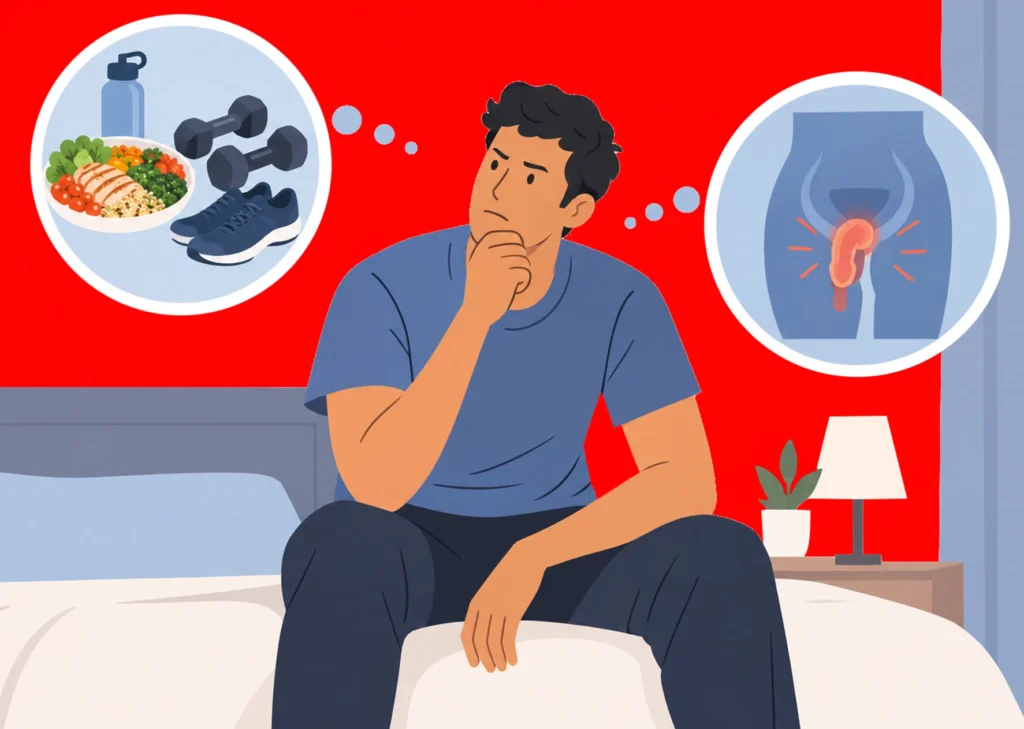
You eat reasonably well. You walk, maybe lift a few times a week. Your last checkup came back fine. Then one night, your body just doesn’t cooperate, and you’re left wondering what went wrong.
Here’s the reassuring part. Erection problems don’t automatically mean something serious is going on. An erection is one of the most delicate things your body does. It needs healthy blood vessels, working nerves, steady hormones and a calm mind, all at the same moment. If one of them slips a little, you’ll often notice it here first.
Let’s look at why it happens, what’s usually behind it, and what actually helps.
Table of Contents
ToggleFeeling Healthy and Being Erection Ready Aren’t the Same Thing
Feeling good day to day tells you your heart, lungs and muscles are coping. An erection asks for something more specific: a rush of blood into very small vessels, and a quick release of tension in the muscle around them.
That’s why erection problems in healthy men are more common than most people admit. Your energy can be great while one small part of that chain is running a bit behind.
Blood Flow Is Where Most Stories Begin
The arteries in the penis are much narrower than the ones near your heart. So when the inner lining of blood vessels gets a little stiff or less responsive, this is often where it shows up first.
This link between blood flow and erectile function is why many doctors treat a change in erections as a useful early hint, not a verdict. It’s a good reason to check your blood pressure, blood sugar and cholesterol, even if you feel fine. Catching a small shift early is far easier than fixing a big one later.
The Causes of Erectile Dysfunction Nobody Talks About
Most articles mention age, diabetes and heart health. Those matter. But the less obvious triggers are often the ones healthy men miss.
- Some blood pressure tablets, antidepressants and allergy medicines can slow things down
- Several drinks in the evening can blunt the nerve signals that start an erection
- Long cycling sessions on a hard, narrow saddle can press on nerves and vessels
- Smoking or vaping tightens blood vessels, even if your lungs feel fine
- Crash diets and heavy training with little recovery can lower your energy and drive
Many factors affecting male sexual health hide in plain sight like this. A quick look at your routine and medicines list can solve more than you’d expect.
Stress Hits Harder Than You Think
So, can stress affect erections? Yes, and it’s one of the most common reasons. When you’re tense, your body releases stress hormones that tighten blood vessels and pull your attention away from the moment.
Anxiety and erection difficulties also feed each other. One off night leads to worry. Worry makes you watch yourself like a spectator. And that mental commentary makes the next night harder.
If this sounds familiar, you’re not broken. You’re stuck in a loop, and loops can be interrupted. Slow breathing, talking openly with your partner, and taking pressure off “performing” all help.
Your Sleep Might Be the Missing Piece
Most men have several erections during deep REM sleep every night. It’s how the body keeps penile tissue oxygen rich and healthy. Cut your sleep short and you cut into that routine.
Sleep quality and erectile health are closely connected in another way too. Testosterone rises during sleep, so a week of short, broken nights can leave you feeling flat and less interested.
One more thing. If your partner says you snore loudly or you wake up tired, mention it to your doctor. Sleep apnea is linked to erection trouble, and it’s treatable.
Hormones Can Be Quietly Out of Step
Hormonal imbalance and erectile health go hand in hand more often than people realize. Low testosterone mostly affects desire, but an underactive thyroid or raised prolactin can change things too.
The good news is that a simple morning blood test can check these. Don’t self diagnose from supplements or online quizzes. Let the numbers guide you.
It’s Not Just an Older Man’s Issue
Many men assume this only happens after 50. But erectile dysfunction in young men is far more common than the stereotype suggests. In younger men, the cause is more often stress, poor sleep, alcohol or performance worry than any heart or vessel issue.
That’s actually encouraging. Lifestyle factors affecting erections respond well to change. Here’s a simple starting plan:
- Aim for seven to eight hours of consistent sleep
- Walk or exercise most days, and mix in some strength work
- Cut back on alcohol and stop smoking if you can
- Review your medicines with your doctor, never stop them on your own
- Talk to your partner instead of carrying it alone
A Simple Clue You Can Check at Home
Here’s a little known tip doctors often use. If you still wake up with a firm erection now and then, your blood vessels and nerves are likely working. That points more toward stress, worry or habits than a physical block.
If those morning erections have faded for weeks, that’s useful information too. It doesn’t mean panic. It just tells your doctor where to look first.
When It’s Worth Seeing a Doctor
Don’t wait for a crisis. A short visit is enough to get clarity. Book one if:
- The change has lasted more than a few weeks
- It came on suddenly
- You also notice low desire, tiredness or mood changes
- You have chest discomfort, numbness or pain with activity
- You’re taking medicines and the trouble started around the same time
Doctors hear this every single day. You won’t surprise anyone.
Medical Support for Stronger Erections
If lifestyle changes aren’t enough, your doctor may suggest a medicine. Avanafil is a PDE5 inhibitor. It also helps to relax blood vessels in the penis so blood can flow in when you are aroused. It doesn’t create desire on its own, so you still need stimulation.
Many men like that it’s usually taken about 15 to 30 minutes before intimacy, and that it tends to be well tolerated. Side effects like headache or flushing can happen. It isn’t safe with nitrate medicines, so always share your full health history first.
If you’d like to learn more, you can read about Avanafil and see how it’s offered.
Before You Go
Erection problems are rarely a sign that something’s “wrong” with you. More often, they’re a message. Maybe it’s stress, sleep, a medicine or a small blood flow change that deserves a look.
Start with the simple things, get a basic checkup, and talk openly with a doctor. You’ll likely find an answer faster than you expect.
Frequently Asked Questions
1. Can you have erection problems even if you're healthy?
Yes. Stress, poor sleep, certain medicines and alcohol can all cause erection problems in otherwise healthy men, and these causes are often reversible with simple changes.
2. Is it normal to lose an erection sometimes?
Yes. Occasional trouble is common and usually linked to tiredness, stress or alcohol. It’s worth checking with a doctor if it continues for several weeks.
3. When should I see a doctor about erection problems?
See a doctor if erection problems last more than a few weeks, appear suddenly, or come with chest discomfort, numbness or low desire. Early advice makes treatment simpler.
4. Can lifestyle changes cure your erection problems?
Often they do. Better sleep, regular movement, less alcohol and no smoking can improve erection problems for many men, though some still need medical support.
5. How does Avanafil help with erection problems?
Avanafil relaxes the blood vessels in the penis to allow blood to flow in on sexual stimulation.It is usually taken 15 to 30 minutes before sex and should be taken only under the guidance of a doctor.