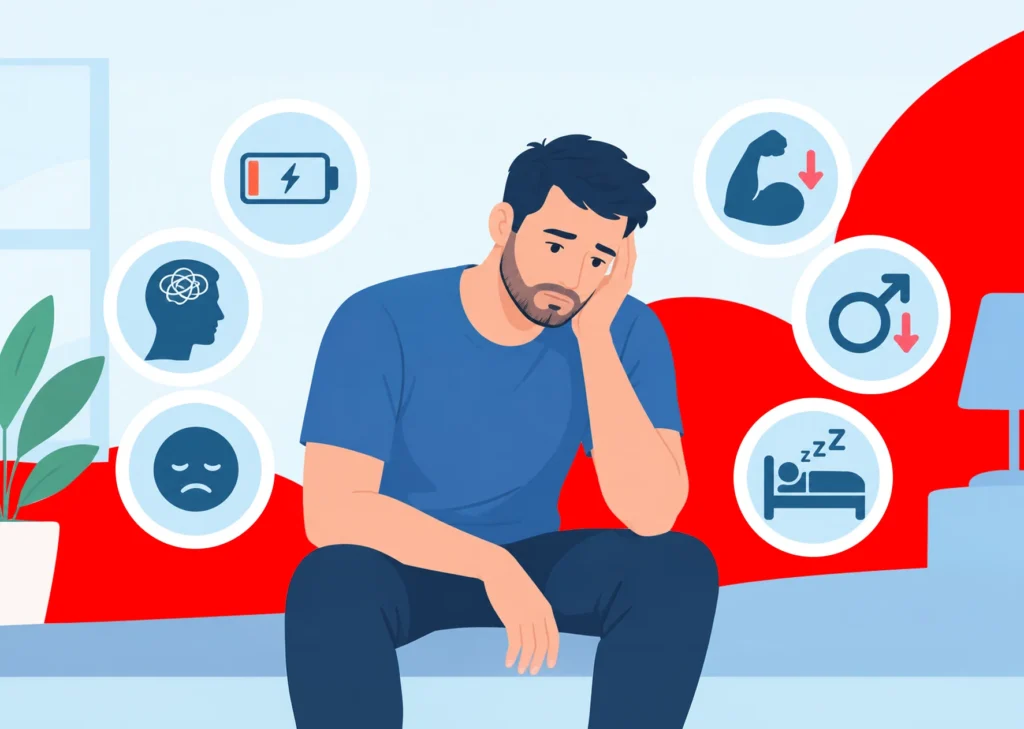
Ever feel like you’re running on half a tank, even after a full night’s sleep? Plenty of men blame stress, work or just getting older. Sometimes, though, there’s a hormone story hiding underneath. Low testosterone tends to creep in slowly, which is exactly why it’s so easy to miss.
If you’ve caught yourself wondering whether it’s just a busy season or something more, you’re far from alone. Many men notice these changes and never mention them, even to their doctor. The sooner you know what to look for, the easier it is to choose your next step with confidence.
In this guide, we’ll walk through what the early signs look like, what could be behind them, and when it makes sense to talk to your doctor. No scare tactics, just clear and practical information.
Table of Contents
ToggleWhy Hormone Changes Are So Easy To Miss
Testosterone doesn’t fall off a cliff. It slips gradually, and the symptoms blend into everyday life, like busy schedules, late nights and too much screen time.
Here’s something many men don’t know. Testosterone follows a daily rhythm. It’s usually highest in the early morning and dips as the day goes on. That’s why a single afternoon blood test can paint a misleading picture. Doctors typically prefer two early morning tests, taken on separate days, before drawing any conclusion.
Early Symptoms Of Low Testosterone You Shouldn’t Ignore
These signs often show up quietly, one at a time:
- Less interest in sex than you’re used to
- Fewer morning erections, which many men never notice
- Ongoing fatigue even after a full night of sleep
- Slower recovery after workouts and less drive to train
- Irritability, a flat mood or trouble focusing
- Losing muscle or gaining belly fat without changing your habits
- Thinning body hair
Low testosterone symptoms in men also tend to show up in groups. One sign on its own rarely means much. Three or four together? That’s worth a closer look.
What’s Really Behind It
Age gets all the blame, but it’s rarely the only factor. When doctors look into signs of low testosterone in males causes usually come from a mix of these:
- Extra body weight, since fat tissue converts testosterone into estrogen
- Poor sleep and untreated sleep apnea
- Long term use of opioid pain medicines
- Type 2 diabetes and metabolic syndrome
- Heavy alcohol use
- Ongoing stress
- Testicular injury or certain medical treatments
The good news is that several of these can be improved. That makes the cause just as important as the number on your lab report.
How Testosterone Changes With Age
Testosterone levels in men by age follow a gentle slope, not a slide. Levels generally peak in the late teens and early twenties. After that, they ease down by roughly 1 percent a year, starting somewhere between 30 and 40.
A commonly used reference range is about 300 to 1,000 ng/dL, though labs vary slightly. Many guidelines treat a reading under 300 ng/dL, together with symptoms, as low.
Here’s the catch. Two men with the same number can feel completely different. That’s why doctors look at how you feel, not just what the report says.
What Your Lab Report Is Really Telling You
Most men see one line on the report, “total testosterone,” and stop there. But there’s more going on behind that number.
Much of your testosterone is attached to a protein called SHBG, short for sex hormone binding globulin. While it’s attached, your body can’t use it. Only the free portion does the work. So a man can have a normal total reading and still have a small usable supply, especially if he’s older, overweight or has a sluggish liver. In those cases, doctors may order a free testosterone test too.
A few more things can nudge a result in the wrong direction:
- A recent illness or a rough week of sleep
- Fasting or not fasting before the draw
- Hard training the day before
- Blood drawn late in the day
If your first result lands in the gray zone, a repeat test is normal. It isn’t a sign something’s being missed.
Three Myths Worth Dropping
- Myth one: it only happens to older men. Men in their 30s can have it, especially with sleep apnea or extra weight.
- Myth two: a low reading always means you need hormone treatment. Often, fixing sleep, weight or medicines moves the number on its own.
- Myth three: an ED pill is a hormone fix. It isn’t, and we’ll get to why next.
Beyond The Bedroom: Health Effects To Know About
Effects of low testosterone on men’s health can reach further than most people expect. Researchers have linked lower levels with:
- Thinner, weaker bones over time
- Mild anemia
- More body fat and changes in how the body handles sugar
- Poor sleep and a lower mood
- Low energy by mid afternoon
Studies have also noticed overlap between lower hormone levels, weight gain and high blood pressure. Cause and effect isn’t fully settled, so there’s no need to panic. It simply shows why a proper check beats guessing.
Where Erection Health Fits In
Hormone levels and erectile dysfunction are cousins, not twins. Testosterone mostly drives desire. Erections depend heavily on healthy circulation. That’s why some men with normal hormone levels still struggle with erections, and why treating one issue doesn’t always fix the other.
Tadalista, a tadalafil based medicine is used for erectile dysfunction. It works by supporting blood flow to the penis when you’re aroused. Think of it as one of the blood flow boosters doctors prescribe for erection support. It doesn’t raise testosterone, and it doesn’t replace a hormone check.
A few safety notes:
- Never combine it with nitrate medicines
- Tell your doctor about all your heart medicines first
- Get a prescription and follow the dose you’re given
Everyday Habits That Can Help
Small changes add up, and they’re worth trying whatever your test shows:
- Aim for seven to nine hours of sleep
- Lift weights or do resistance training two to three times a week
- Lose extra weight gradually, since this can lift testosterone in men carrying excess fat
- Cut back on heavy drinking
- Review long term medicines with your doctor
When To Talk To A Doctor
Reach out if your symptoms last more than a few weeks, affect your work or relationships, or you’ve noticed a sudden drop in desire. Before the visit, jot down your symptoms and bring a list of medicines. Book a morning appointment if you can, since that’s when blood tests are most reliable.
You don’t need to wait for things to get worse. One honest conversation can save months of guessing. Your doctor may also ask about your sleep, weight, alcohol use and daily routine, because these often explain more than people expect. If you already use an ED medicine, mention that too, so your care plan stays safe and complete.