Millions of adults in the US are affected by deadly inflammatory and autoimmune conditions often disrupting daily life and long-term health. Around 8% of the US population suffer from autoimmune disease. There are altogether 80 to 150 autoimmune diseases worldwide. Autoimmune diseases often lead to chronic inflammation, pain, fatigue, and progressive organ damage if left untreated. We can come to a conclusion that inflammation and autoimmune diseases are interdependent. Under normal circumstances, inflammation helps the body heal. Inflammation is the body’s response to defend itself but when it turns to excessive or unbearable pain it takes up to autoimmune diseases.
This article focuses on understanding how Medrol 4 mg Tablet works-and why it is so effective can help patients and caregivers make informed decisions about their treatment.
Table of Contents
ToggleWhat is a Medrol 4 mg tablet?
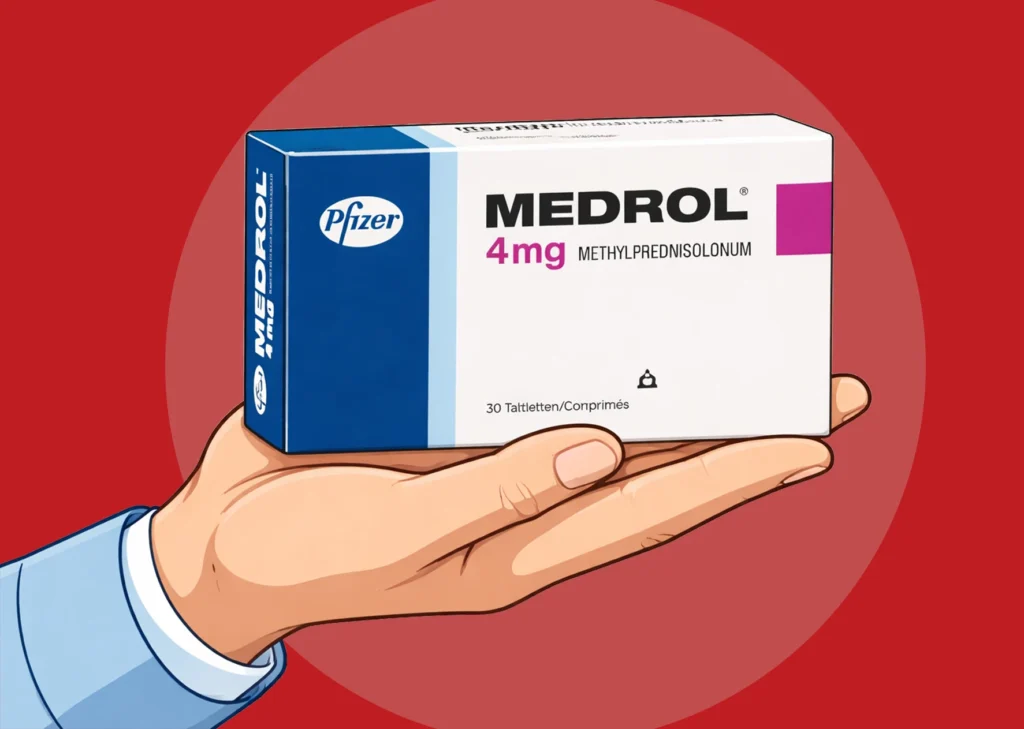
Medrol 4 mg tablet is a drug that is used to treat a wide range of diseases such as autoimmune diseases, allergic conditions and inflammation. It is a systemic corticosteroid medication that acts the same as cortisol which is a hormone released by adrenal glands.
The active ingredient present in the tablet is Methylprednisolone (4 mg).
Medrol 4 mg Tablet for Inflammation
Inflammation is the body’s response to any injury or infection. It can be acute or chronic depending on the severity of the injury.
Common Inflammatory Conditions Treated are
-
- Rheumatoid arthritis
- Osteoarthritis flare-ups
- Bursitis and tendonitis
- Inflammatory bowel disease
- Severe allergic reactions
- Asthma and COPD
- Inflammatory skin conditions
Working:
Medrol 4 mg tablet acts at the cellular level to block inflammatory chemicals. By doing so, it:
- Reduces inflammation and redness
- Relieves pain and stiffness
- Prevents immune-related tissue damage
- Improves mobility and comfort
This mechanism makes Medrol the first choice of drug when standard pain relievers or anti-inflammatory drugs are not sufficient.
Dosage and Administration:
- The dosage depends on the severity of inflammation and the patient’s response
- Usually taken with food
- Physicians usually prescribe Medrol in a gradual tapering schedule
Important: Abruptly stopping Medrol can lead to adrenal insufficiency, fatigue,hypotension, and worsening symptoms.
Following are the side-effects that can be seen:
Common Side Effects are
- Increased appetite
- Mood changes
- Insomnia
- Fluid retention
Serious Side Effects are
- Osteoporosis
- Increased infection risk
- Hyperglycaemia
- Hypertension
Medrol 4 mg Tablet for autoimmune conditions
Autoimmune disease is the one where the immune system attacks its own body cells. Common Autoimmune Conditions that can be treated by Medrol 4 mg are Rheumatoid arthritis, Systemic lupus erythematosus, Multiple sclerosis, Autoimmune hepatitis, Vasculitis, Sarcoidosis, Psoriasis and other autoimmune skin disorders
Working:
In autoimmune conditions, the immune system produces inflammatory chemicals that damage healthy cells. Medrol 4 mg tablet works by suppressing the overactive immune responses due to this there is reduction in the production of inflammatory cytokines which leads to prevention in immune-mediated tissue damage. Due to all these factors there is relief in pain, swelling, and stiffness. Because it acts at the cellular level, Medrol provides rapid symptom control during disease flare-ups.
Potential Side Effects are listed below:
Usual Side Effects
- Hyperphagia
- Weight gain
- Mood changes
- Insomnia
Severe Risks
- Increased infection risk
- Bone weakening
- Hyperglycaemia
- Hypertension
- Adrenal suppression
How Medrol 4 mg works?
Medrol 4 mg tablet contains the active ingredient methylprednisolone, a corticosteroid medication that works by acting as a powerful anti-inflammatory and immunosuppressant agent.
- Mimics Natural Hormone
The stress hormone in the body, Cortisol, is produced by the adrenal gland that helps the body to act towards any injury, illness and stress. Methylprednisolone is a corticosteroid that mimics the stress hormone, Cortisol.
- Puts ‘brake’ to inflammation
As the drug enters the body it acts as natural cortisol which blocks the reactions such as redness, itching, swelling, etc.
Methylprednisolone suppresses the activity and migration of WBC’s and other substances (like cytokines, chemokines) that the immune system uses to fight against any external stress which helps to prevent inflammation and allergic reactions.
Corticosteroid tablets for inflammation
Corticosteroid tablets are powerful prescription drugs that help control inflammation by calming an overactive immune response. They are commonly used when inflammation is severe or does not respond to standard treatments. Corticosteroid tablets are synthetic drugs that act like cortisol, a hormone produced by the adrenal glands. Cortisol plays a key role in regulation of inflammation, immune response, metabolism, and stress. Common oral corticosteroids include Prednisone, Prednisolone, Methylprednisolone (Medrol) and Dexamethasone.
How Corticosteroid Tablets Reduce Inflammation?
Corticosteroids work by suppressing the immune system and blocking inflammatory chemicals such as cytokines, prostaglandins, and leukotrienes.
Key Anti-Inflammatory Actions
- Decreases inflammation, redness, and heat
- Relieve pain and stiffness
- Prevent immune-related tissue damage
- Control allergic and autoimmune reactions
Because they act at the cellular level, corticosteroids are often more powerful than standard anti-inflammatory painkillers. Corticosteroid tablets are used to treat inflammation caused by a wide range of medical conditions, including:
- Rheumatoid arthritis
- Lupus (SLE)
- Asthma flare-ups
- COPD
- Hypersensitivity
- Eczema
- Psoriasis
- Inflammatory bowel disease
- Autoimmune hepatitis
- Certain neurological disorders
Interaction with other drugs:
Taking Medrol with any of the following medicines can change the effect of either of them and cause some undesirable side effects:
- Clarithromycin (Oral medication)
Your doctor may monitor your potassium levels closely. Concurrent use may disturb the heart rhythm.
- Shingles Vaccine
- Cholera Vaccine
Safety advice
- Avoid consumption of alcohol
- Medrol 4 mg may be unsafe to use during pregnancy. Since there are limited studies taking place in humans we do not know exactly how it affects humans but in animals it showed harmful effects on developing babies.
- Medrol 4 mg may cause side effects which could affect your ability to drive. Undesirable effects, such as dizziness, vertigo, visual disturbances and fatigue are possible after treatment with Medrol 4 mg.
- Medrol 4 mg is safe to use in patients with kidney disease. However, talk to your physician if you have any underlying kidney disease.
Conclusion
When inflammation or autoimmune flare-ups take control, Medrol 4 mg helps restore balance. By targeting the immune system at its source, it delivers fast relief from pain, swelling, and stiffness often when other treatments aren’t enough. Used correctly under medical supervision, Medrol can be a game-changer in managing symptoms and improving everyday life.
FAQs
1. How does Medrol work for inflammation?
Medrol works by suppressing inflammatory chemicals and calming the immune system. This reduces swelling, redness, pain, and tissue damage at the cellular level.
2. Is Medrol 4 mg a painkiller?
No. Medrol 4 mg is not a painkiller. It reduces inflammation and immune activity, which indirectly helps relieve pain and stiffness.
3. How long does Medrol 4 mg take to work?
Many patients begin to feel relief within 24 to 48 hours, especially during acute inflammation.
4. Is Medrol 4 mg the same as anabolic steroids?
No. Medrol 4 mg is a corticosteroid, which is completely different from anabolic steroids used for muscle building.
5.Why must Medrol doses be reduced slowly?
Stopping Medrol suddenly can confuse the adrenal glands and cause withdrawal symptoms. Tapering allows the body to adjust safely.