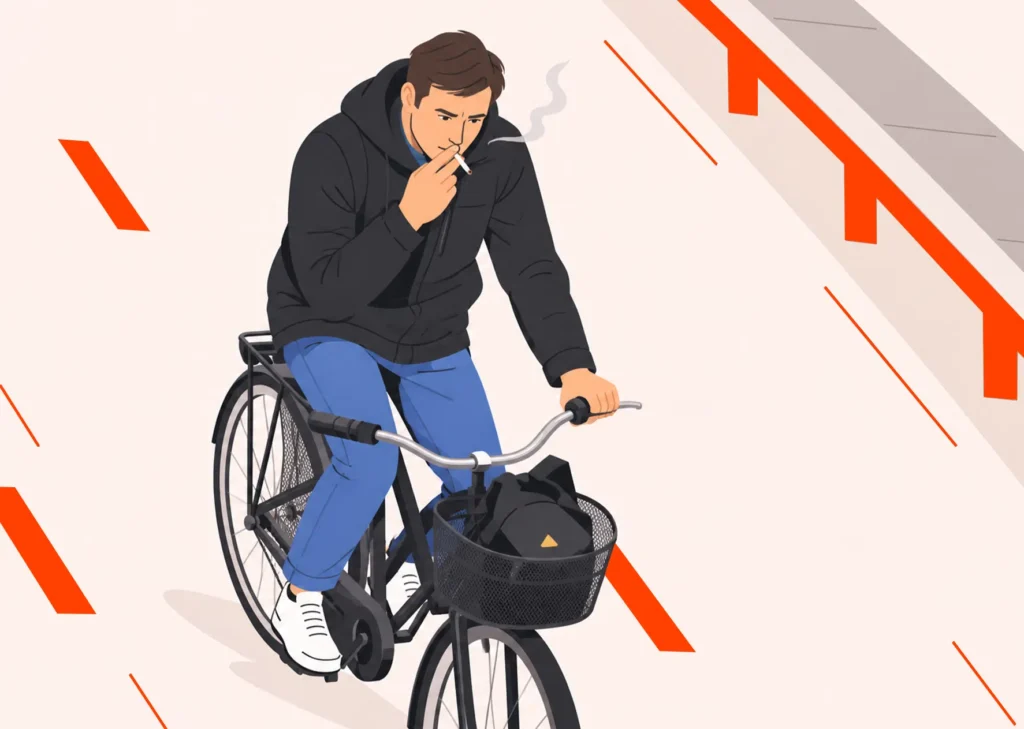
You eat okay, you stay active, and you still notice your erections aren’t what they used to be. It’s frustrating, and more common than most men admit. Here’s what rarely gets said: the cause is often hiding in your daily routine, not in some big medical event. The everyday habits linked to ED are usually so ordinary that nobody thinks to question them. A long commute, a favorite bike, an evening cigarette. None of these guarantees a problem. But over months and years, they can quietly affect blood flow and nerve signals. Let’s look at what’s going on and what you can do about it.
Table of Contents
ToggleHow Erections Actually Work
An erection is a blood flow event, run by your nerves. When you feel aroused, nerves release nitric oxide. That gas relaxes the muscle in the penile arteries, so blood rushes into two spongy chambers and they swell. The swelling presses on the veins that drain blood away, so the blood stays put.
Here’s the part few people mention. The arteries inside the penis are tiny, only about 1 to 2 millimeters wide. That’s narrower than the arteries that feed your heart. So when circulation is slightly off, the penis can show it first. That’s why doctors often treat erection changes as a useful early clue about overall vascular health.
One more fact. Healthy men usually have several erections during REM sleep each night. If you still wake up with them, that often points toward stress or habits rather than physical damage, though it’s not a guarantee.
7 Everyday Habits Linked to ED
No single habit here causes trouble alone. They’re small weights that add up. Here are seven worth checking:
- Long rides on a hard, narrow bike seat. Pressure on the area between your legs can squeeze arteries and nerves.
- Sitting for hours without a break. Blood flow slows and pelvic pressure builds.
- Smoking or vaping. Nicotine tightens your blood vessels every time.
- Regular heavy drinking. Alcohol and erectile dysfunction are connected because alcohol dulls the nerve signals that start an erection.
- Short or broken sleep. Much of your daily testosterone release happens while you sleep.
- Constant stress. High cortisol keeps your body in alert mode, and arousal slides down the priority list.
- Skipping exercise and eating mostly processed food. Extra belly fat and high blood sugar can damage the lining of your blood vessels.
The good news is that every one of these can change. These everyday habits linked to ED respond to small, steady fixes better than most men expect.
Cycling Without the Risk: Quick Fixes
Cycling is great for your heart, and a healthy heart helps erections. The activity isn’t the problem. The seat can be.
Cycling and erectile dysfunction get talked about together because of one spot, the perineum. That’s the soft area between the genitals and the anus. It carries a major artery and nerves, and a narrow saddle presses straight onto it. Studies of police officers on bike patrol found that saddles with no nose, or with a cutout, reduced numbness and improved oxygen levels in the penis compared with standard seats.
When it comes to bike seats and ED, width matters more than thick padding.
Try these quick fixes:
- Choose a wider saddle with a cutout or a short nose.
- Keep the saddle level, or tilt the nose down very slightly.
- Stand on the pedals for a few seconds every 10 to 15 minutes.
- Treat numbness or tingling as a signal to ease off and adjust your setup.
Cycling is one of the everyday habits linked to ED that’s easiest to fix.
Smoking And ED
The link between smoking and erectile dysfunction is one of the best studied of all. Each cigarette narrows blood vessels for a short time. Over the years, smoke also damages the inner lining of your arteries, the very layer that makes nitric oxide. Without enough of it, erections get weaker or harder to keep.
Two details surprise people. Vaping isn’t a clean swap, because nicotine itself tightens blood vessels. And men who smoke tend to notice erection problems at younger ages than non-smokers.
Smoking is among the most studied everyday habits linked to ED, and the encouraging part is that blood vessels can start to heal once you stop. If quitting feels tough, ask your doctor about support.
Sitting And ED Connection
Sitting isn’t a villain. Long, unbroken sitting is the issue. Hours in a chair press on the pelvic area and slow circulation. A mostly seated life also pairs with weight gain and higher blood sugar, which affect erections too.
Here’s a small fact with a big takeaway. In one lab study, blood vessel function in the legs dropped after three hours of sitting. A five-minute walk every hour kept that drop from happening. So you don’t need a gym session to help. You need to move now and then.
Some easy tweaks:
- Set a timer to stand up every 30 to 45 minutes.
- Move your wallet out of your back pocket when you sit.
- Use a standing desk for part of the day if you can.
Alcohol And ED
A drink or two can ease nerves, which feels helpful. But alcohol is a depressant, and heavier drinking slows the signals between your brain and your body. Over time, regular heavy drinking can also lower testosterone and harm nerves. It also cuts into REM sleep.
A simple test: if your erections are weaker after drinking, cut back for a month and see what changes.
Can Lifestyle Changes Reverse ED?
Often, yes, especially when habits are the main driver. Research shows that regular aerobic exercise, healthy weight loss, quitting smoking, and a Mediterranean-style diet can all improve erectile function. Blood vessels heal slowly, so think weeks to months.
Most everyday habits linked to ED can be changed, but habits aren’t always the whole story. Diabetes, high blood pressure, low testosterone, some medicines, and anxiety can play a part too. That’s why a checkup matters. A doctor can look at the full picture and tell you whether ED medication might help while your habits improve. It works best alongside lifestyle changes, not instead of them.
A Simple 30-Day Habit Reset
You don’t need a life makeover. Take it one week at a time. This reset targets the everyday habits linked to ED we’ve covered:
- Week 1, Notice. Jot down your ride time, sitting hours, drinks, cigarettes, and sleep. No changes yet.
- Week 2, Adjust. Fix your seat setup and add a five-minute movement break every hour.
- Week 3, Reduce. Cut back on alcohol. Pick a day to stop smoking nicotine. Talk to your doctor about help to stop.
- Week 4, Build. Walk briskly for 30 minutes most days and aim for seven hours of sleep.
On day 30, check in with yourself. If nothing has improved, that’s useful information, not a failure. It’s your cue to speak with a doctor.
The Bottom Line
Erection health is built in small, everyday moments. The reassuring part is that you can change those moments. Take another look at the everyday habits linked to ED we’ve covered, start with the one that’s easiest to fix, and give your body time to respond. If problems stay, talk to a doctor. It’s a common issue, and help is available.
FAQs
1. Can everyday habits cause erectile dysfunction?
Yes, they do pitch in. There are several daily habits associated with ED, including smoking, heavy drinking and long stretches of sitting that can take a toll on blood flow and nerve response over time.
2. Does sitting cause ED?
3. Can cycling cause permanent ED?
4. How long does it take to see changes after quitting smoking?
Within weeks to months of quitting smoking, some men will notice improved erections as the blood vessels begin to heal. Recovery varies with age, how long you smoked and general health.