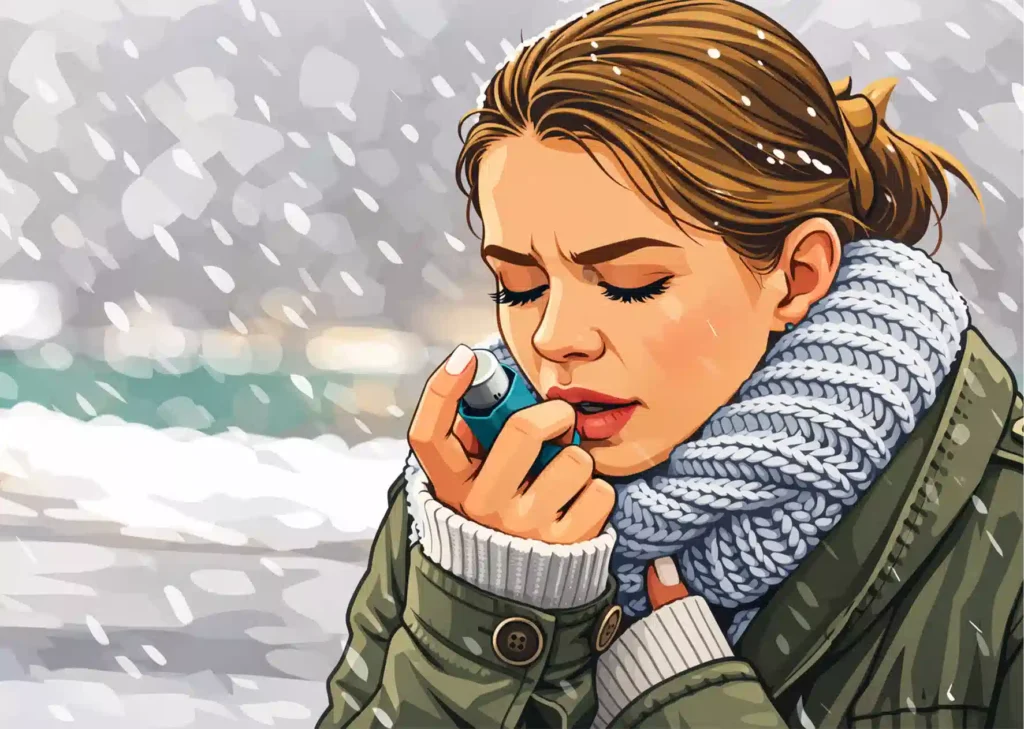
Have you experienced breathing discomfort when the weather switches suddenly?
One day it’s warm and comfortable. Next, it’s cold, windy, or unusually humid, and your chest feels tighter than usual.
If you live with asthma or COPD, this isn’t just in your head. The connection between changing weather and lung health is very real.
Your lungs are sensitive. They respond to changes in temperature, air pressure, moisture content, and even pollutants carried by shifting winds. Your airways often react to sudden changes in the weather.
Let’s discuss the causes of that as well as practical solutions.
Table of Contents
ToggleWhy Weather Has Such a Big Impact on Breathing
Your lungs do best with stable conditions, the air that isn’t too cold, too dry, or too heavy.
When conditions change suddenly, your airways may tighten, produce more mucus, or become irritated. That’s why sudden weather changes and breathing problems often go hand in hand.
The relationship between weather and lung health becomes especially noticeable during seasonal transitions, such as when summer turns into fall or winter suddenly drops overnight.
It’s not a weakness. It’s physiology.
Cold Air and Tight Airways
Let’s start with cold weather.
When you inhale cold air, your airways react quickly. The air you breathe needs to be warmed and humidified before it reaches deep into your lungs. If the air is very cold, that warming process can irritate sensitive airway linings.
Cold air effects on lungs often include:
- Chest tightness
- Coughing
- Wheezing
- Increased mucus
For people with asthma, cold air can trigger bronchospasm, where the muscles around the airways tighten.
For people with COPD, cold air may worsen existing airway inflammation.
This is one of the most obvious examples of how weather and lung health are closely linked.
Wearing a scarf over your nose and mouth during winter can help warm the air before it enters your lungs. Small habits like that make a real difference.
Humidity: Too Much or Too Little
Humidity plays a bigger role than many people realize.
When the air is very dry, it can irritate the airways and dry out protective mucus layers.
When the air is too humid, it can feel heavy and harder to breathe. High humidity may also encourage mold growth and increase allergen exposure.
Humidity and lung function are connected because airway linings rely on a balanced moisture level to work properly.
Too dry? Airways may become inflamed.
Too humid? Breathing may feel labored and sticky.
This delicate balance explains another layer of weather and lung health challenges many people experience during monsoon or peak summer seasons.
Air Pressure and Storms
Have you ever felt worse just before a storm?
As barometric pressure rises or falls, it can subtly influence how easily air flows in and out of your lungs. Before thunderstorms or sudden changes in the weather, some people report experiencing more dyspnea.
Many patients regularly observe this pattern, though research is still in its early stages.
That’s another reason why weather and lung health can’t be separated. Your lungs are sensitive to even subtle environmental changes.
Why Weather Affect Breathing So Quickly
You may wonder: why weather affects breathing so quickly?
The answer is straightforward: sensitive nerves and muscle tissue line your airways.
These tissues react immediately to cold, dry, or contaminated air. The body triggers defense mechanisms because it perceives it as a possible irritant:
- Airways getting narrower
- Increasing the production of mucus
- Activating the cough reflex
These responses are designed to keep you safe. However, they can feel overwhelming in cases of chronic respiratory conditions.
Instead of being taken by surprise, you can prepare for these reactions by being aware of the weather and your lung health.
What Happens to Inhalers During Weather Changes?
Let’s move to something practical for a moment – your inhaler.
Most people think weather only affects their breathing, but it can affect the inhaler itself too. If it’s extremely cold, the spray might feel weaker because the pressure inside the canister drops. And if it’s left in very high heat, like inside a parked car, the medication inside can lose its stability.
That’s why how and where you store your inhaler actually matters more than people realize.
Avoid:
- Inhalers left in hot cars
- Putting them in freezing conditions
- Keeping them in moist conditions
Another important point is inhaler use during weather changes. If you know cold air triggers symptoms, using your maintenance inhaler consistently becomes even more important during seasonal transitions.
Prevention beats reaction.
Seasonal Transitions: The Toughest Time for Lungs
Spring and fall are beautiful seasons, but they can be difficult for respiratory health.
Temperatures swing up and down, Pollen levels rise, and Humidity can change almost overnight.
Many people experience flare-ups during these times because weather and lung health are directly influenced by allergens combined with temperature instability.
Monitoring forecasts and preparing ahead of time by carrying your rescue inhaler, avoiding outdoor exposure during high pollen counts can reduce symptom spikes.
Practical Tips to Protect Your Lungs
You can’t really control what the weather decides to do. One day it’s warm, the next day it’s windy and cold. But what you can control is how you prepare for it. A few small habits can make a big difference. Try checking the forecast before you step out, so you’re not caught off guard. Dress in layers if temperatures are unpredictable.
If the air is cold, covering your nose and mouth with a scarf or mask can help warm the air before it reaches your lungs. Drink enough water; it actually helps keep mucus from getting too thick. Pay attention to the air inside your home too, especially during seasonal shifts. And on days when it’s extremely hot or freezing cold, it’s okay to skip that outdoor workout.
When you stay a step ahead like this, those sudden weather changes don’t feel as overwhelming. You feel more prepared, and that alone eases a lot of the breathing discomfort people worry about. The more you learn about weather and lung health, the more confident you become in handling whatever the forecast brings. And preparation reduces anxiety.
The Emotional Side of Weather Changes
Let’s be honest.
It can be really discouraging when one week you feel like you’ve finally got your breathing under control, and the next week it feels all over the place again. It almost makes you wonder if all your effort is slipping away.
But a rough few days don’t automatically mean your condition is getting worse. Most of the time, it’s just your lungs reacting to what’s happening around you, changes in the air, temperature, allergens, or pollution. Sometimes it’s less about losing progress and more about your body adjusting to its environment.
Recognizing the connection between weather and lung health helps you avoid unnecessary panic.
It’s not a failure. It’s sensitivity.
When to Seek Medical Advice
If you notice that your weather-related symptoms are hanging around longer than they usually do, or your regular medication doesn’t seem to be helping the way it normally does, that’s something to pay attention to. The same goes if flare-ups are happening more often, or if your breathing is starting to disturb your sleep or make everyday tasks harder than they should be.
That’s usually a good time to check in with your healthcare provider. It doesn’t automatically mean something serious is wrong. Sometimes your treatment just needs a small adjustment.
Managing sudden weather and lung health isn’t always about big changes; it can be as simple as tweaking the timing of your medication or adjusting the dose under medical guidance.
The Bottom Line
Weather affects everyone, but it affects people with asthma and COPD more noticeably.
From cold air to humidity shifts and pressure changes, your lungs respond quickly to environmental changes.
Understanding weather and lung health gives you power. When you stay a little aware of what’s coming, you give yourself a head start. You can notice patterns early, keep your inhalers stored properly, and tweak your daily routine before a flare-up even gets the chance to build up.
Your lungs don’t need the weather to be perfect. They just need you to be prepared and a little mindful. With a few steady habits in place, even those sudden shifts in temperature or air quality don’t have to take over your breathing.
FAQs
1. Can weather really affect how my inhaler works?
It can. Very cold temperatures may make the spray feel weaker, and excessive heat can affect the medication inside. That’s why keeping your inhaler at room temperature, not in a freezing bag or a hot car, is important.
2. Why does the abrupt change in weather make it harder for me to breathe?
When the temperature, humidity, or air pressure shifts quickly, your airways can react. For some people, cold air tightens the chest. For others, humid or stormy weather makes breathing feel heavier. Your lungs are simply sensitive to those environmental changes.
3. Why does cold air make my chest feel tight so quickly?
Cold air is usually dry, and when you breathe in, it make you irritate sensitive airways. Your lungs sometimes react by tightening slightly to protect themselves. That tightening is what creates that uncomfortable, squeezed feeling in your chest.
4. Can humidity make breathing harder, too?
Yes, it can. When the air is humid, it feels heavier and thicker. For some people, that makes each breath feel like a little more effort. On the flip side, very dry air can also irritate the airways. It’s really about how your lungs personally respond.
5. Why do I feel worse before a storm?
Before storms, some people are sensitive to drops in air pressure. It’s more than your imagination. For those people who have asthma or COPD, changes in barometric pressure can make breathing feel a little more challenging.