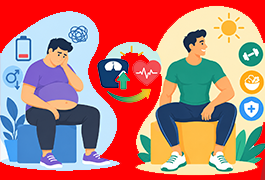
Most people notice this, but few talk about it. You put on weight, or you lose it very fast, and a few months later your interest in sex isn’t the same. You feel tired. Maybe you feel a bit shy about your body too.
Is it all in your head? Not really. Weight loss and sex drive are connected in real ways. In this post we’ll explain how, in simple words, for both men and women.
How Weight and Libido Are Connected
Your sex drive depends on three things working together: hormones, blood flow and your mood. Weight can touch all three.
Body fat isn’t just padding. It makes hormones, and it sends out signals that cause low level swelling inside the body. It also changes how you use blood sugar. When all of that goes off balance, desire usually drops.
Many people don’t know that this works like a circle. More fat can lower testosterone, and lower testosterone makes it easier to gain more fat. The good news is that you can break the circle at any point, and the rest starts to improve.
The link between weight loss and sex drive goes both ways, so let’s look at each side.
Table of Contents
ToggleHow Excess Weight Can Lower Sex Drive
Doctors have studied excess weight and sexual health for years, and the same few causes keep showing up.
- Hormones: Fat tissue turns testosterone into estrogen, so testosterone falls.
- Blood sugar: Insulin resistance makes you tired and less interested.
- Blood flow: Over time, blood vessels get stiffer. That affects arousal and erections.
- Sleep: Extra weight often brings sleep apnea, and poor sleep lowers testosterone.
- Confidence: If you don’t feel good in your body, it’s hard to feel in the mood.
Fat around the belly is the biggest problem here. It holds a lot of the enzyme that turns testosterone into estrogen, which is why belly fat and testosterone usually move in opposite directions. Doctors often use a waist size above 102 cm for men, or 88 cm for women, as a warning sign.
Sleep apnea gets missed a lot. If you snore loudly, wake up with a headache or feel tired after a full night in bed, ask your doctor about it. Many people have it for years without knowing.
Does Losing Weight Increase Sex Drive?
So, can losing weight increase sex drive? For a lot of people, yes. But it’s slow, so don’t expect a change in two weeks.
Studies on men with obesity show testosterone going up as weight comes down. The more weight they lose, the bigger the rise tends to be. Women often report better sexual function too, especially if PCOS or insulin resistance improves along the way.
Most people notice changes in a similar order. Sleep and energy get better first. Then comes stamina and confidence. Hormone changes show up later, often after several months. That’s a common pattern, not a promise.
When Weight Loss Can Lower Libido
This is the part most articles skip. Losing weight the wrong way can flatten your drive.
Your brain keeps track of your fuel. If you eat far less than you burn for a long time, it turns down the reproductive hormones to save energy. That’s survival, not a fault in you.
Common reasons weight loss lowers libido:
- Crash diets and skipped meals
- Losing muscle along with fat
- Low zinc, iron, vitamin D or B12
- Too much training with too little rest
- Constant stress
If your drive dropped soon after you started a strict diet, suspect the diet first. Losing about half a kilo to one kilo a week is gentler on your body. Once you start eating properly again, weight loss and sex drive tend to recover together.
Weight Loss and Sex Drive in Men
Men often mix up two things. Libido is wanting sex. Erectile function is whether your body responds. They’re not the same.
Extra weight usually hits erections first, because of blood flow. Desire falls later, because of testosterone. So you can want sex and still struggle, or the other way round.
Signs your testosterone may be low:
- Less interest in sex
- Feeling tired all the time
- Low mood
- Losing muscle even when you train
A morning blood test can check it. Doctors usually repeat it once, because the numbers change during the day.
Weight Loss and Sex Drive in Women
For women it’s more complicated, and the scale isn’t the whole story. Weight gain and low libido in women often have the same cause, like PCOS, thyroid trouble, perimenopause or some antidepressants. The weight didn’t always cause the low drive. Both can come from the same hormone change.
How you feel about your body counts too. Sometimes a woman loses a few kilos, feels better in her clothes, and her interest comes back before any test changes.
Also think about the months after having a baby, heavy periods that lower iron, and poor sleep. All of these can quietly lower desire. Mention them to your doctor instead of blaming yourself.
Weight Loss Medications and Libido: What We Know
Honestly, research here is still new, so nobody can give you a neat answer.
GLP1 medicines like semaglutide and liraglutide reduce appetite. Some men say their sexual function improved as the weight came off. Others say their desire dropped, often along with nausea or eating very little. Orlistat isn’t a hormone drug, but it can lower fat soluble vitamins if your diet is poor.
Kamagra is different. It contains sildenafil, which helps blood flow for an erection. It doesn’t create desire, and you still need to feel aroused for it to work.
Two safety points matter here. Never take sildenafil with nitrate medicines, because your blood pressure can drop too low. And tell your doctor about everything you take, especially if you have heart problems, diabetes or high blood pressure.
If a weight loss medicine seems to change your drive, don’t just stop it or push through. Talk to your doctor. Nobody should have to choose between weight loss and sex drive, and a doctor can usually help you keep both.
Healthy Ways to Support Weight and Sexual Health
Small habits you can keep beat big changes you can’t. For weight loss and sexual health, this is what I’d suggest:
- Lose weight slowly and steadily.
- Eat enough protein so you keep your muscle.
- Lift weights twice a week.
- Walk, cycle or swim for blood flow.
- Sleep seven to nine hours.
- Cut back on alcohol, which lowers testosterone and dulls arousal.
- Find a way to calm stress, even ten quiet minutes a day.
On exercise and sex drive, moderation is best. Regular workouts tend to raise desire, but hard daily sessions with no rest can pull it down. Get your zinc from food, like eggs, chickpeas and pumpkin seeds, and skip big supplement doses unless a doctor says so.
Keep it boring and steady. That’s how weight loss and sex drive both end up better.
When Should You Talk to a Doctor About Low Libido?
Everyone has quiet spells. It’s worth seeing a doctor if low desire:
- Lasts more than three months
- Started suddenly
- Comes with tiredness, mood changes or weight changes you can’t explain
- Is causing problems in your relationship
- Comes with erection problems
Low sex drive causes are often mixed. Thyroid problems, diabetes, low testosterone, depression, sleep apnea, medicines and stress can all play a part. Your doctor may check testosterone, thyroid, blood sugar, vitamin D and iron.
Please don’t be embarrassed. Doctors hear this every day. Tell them about any recent diet or weight changes too.
Final Thoughts
Weight and libido do affect each other, but it isn’t as simple as “lose weight and feel better.” Extra weight can lower desire. So I can crash dieting. What works best is slow, well fed and well rested.
If you take one thing away, make it this: weight loss and sex drive improve best when you build habits you can keep, and you speak up early if something feels off