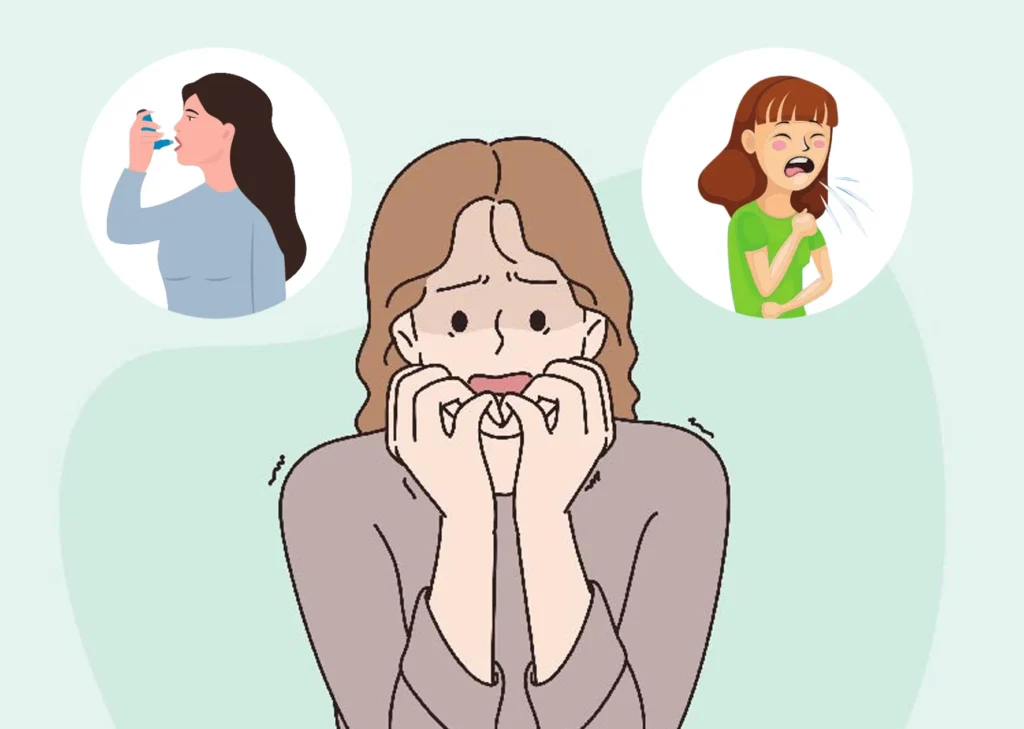
If you live with COPD or asthma, you know something most people don’t think about breathing isn’t always automatic. Sometimes it feels tight. Sometimes it feels heavy. And sometimes, it feels scary.
And when breathing becomes scary, anxiety shows up.
Your chest tightness. Your heart races. Your thoughts spiral. And suddenly you’re stuck in a loop of breathlessness causing panic, and panic making breathlessness worse.
Learning how to stay calm and breathe with COPD and asthma isn’t just helpful, it’s life-changing. Because when you control your mind, you often help your lungs follow.
Let’s talk about it like real people.
No complicated medical lecture. Just practical, reassuring guidance you can actually use.
Table of Contents
ToggleThe Anxiety Breathing Cycle (And Why It Feels So Intense)
Before we talk about solutions, let’s understand what’s happening.
When your airways tighten or feel restricted, your brain goes into protection mode. It thinks something is wrong. That activates your fight-or-flight response.
- Your heart beats faster.
- Your muscles tense.
- Your breathing becomes quicker and shallower.
This is exactly how anxiety affects breathing in COPD and asthma it speeds things up when your lungs actually need you to slow down.
The frustrating part? hmmm…. The more anxious you feel, the tighter your chest can feel. It becomes a loop. That’s why learning how to stay calm and breathe with COPD and asthma is as much about calming your nervous system as it is about opening your airways.
Step One: Pause Before You Panic
This sounds simple. It isn’t easy.
The moment you notice breathlessness building, your first instinct might be to gasp or take rapid breaths.
Instead, try this:
- Stop.
- Plant your feet on the floor.
- Relax your shoulders.
Then gently remind yourself:
“I have handled this before.”
Because you probably have.
A big part of how to stay calm and breathe with COPD and asthma is retraining your brain not to treat every breathing change like an emergency.
Slow It Down: The Power of Controlled Breathing
When anxiety hits, breathing becomes shallow and fast. The goal is to reverse that pattern.
Pursed-Lip Breathing
This is one of the most effective Calm breathing exercises for asthma and COPD.
- Inhale slowly through your nose for two counts.
- Purse your lips like you’re blowing out a candle.
- Exhale slowly for four counts.
- Longer exhale. Always.
This keeps airways open longer and prevents air from getting trapped, especially in COPD.
Practice this when you feel fine, so it feels natural when you need it.
It’s one of the simplest tools for how to stay calm and breathe with COPD and asthma, and it works surprisingly well.
Ground Your Mind While You Breathe
Anxiety doesn’t just live in your chest it lives in your thoughts.
When breathlessness starts, your mind may jump to worst-case scenarios:
- What if this gets worse?
- What if I can’t catch my breath?
- What if I need the hospital?
Instead of fighting those thoughts, gently redirect them.
Try this grounding exercise:
- Name 5 things you can see
- 4 things you can feel
- 3 things you can hear
- 2 things you can smell
- 1 thing you can taste
It sounds simple, but grounding interrupts the panic cycle.
Learning how to stay calm and breathe with COPD and asthma means managing both lungs and thoughts at the same time.
Prepare Before Anxiety Starts
Sometimes anxiety comes from unpredictability.
You may feel calmer knowing:
- Your rescue inhaler is nearby
- You’ve taken your maintenance medication
- You understand your triggers
- You have a written action plan
- Preparation builds confidence.
When you feel prepared, breathlessness feels less threatening. And that confidence is a major part of how to stay calm and breathe with COPD and asthma.
Use Relaxation as a Daily Habit (Not Just in Crisis)
Waiting until you’re anxious to practice relaxation is like learning to swim during a storm.
Daily Relaxation techniques for COPD and asthma can reduce overall tension in your body and make flare-ups easier to handle.
Some simple options:
- Gentle yoga
- Guided meditation
- Soft music and slow breathing before bed
- Progressive muscle relaxation (tighten and release muscles slowly)
- Even 5 to 10 minutes a day trains your nervous system to respond differently.
Over time, this makes how to stay calm and breathe with COPD and asthma feel more natural and less forced.
Understand the Difference Between Panic and a Flare-Up
This is important.
Panic and breathlessness in asthma and COPD can feel very similar but they are not always the same thing.
A flare-up often includes:
- Wheezing
- Persistent coughing
- Reduced response to rescue inhaler
- Increased mucus
- Panic often includes:
- Tingling fingers
- Sweating
- Racing thoughts
- Sudden fear
- Sometimes they overlap. That’s okay.
If you’re unsure, follow your action plan and use your prescribed medication. But remember not every tight feeling is a medical emergency.
Sometimes, it’s anxiety amplifying the sensation.
Recognizing this distinction helps you master how to stay calm and breathe with COPD and asthma more effectively.
Posture Matters More Than You Think
When you’re anxious, you might hunch forward or tense your shoulders. That compresses your lungs.
Try this instead:
- Sit upright
- Lean slightly forward
- Rest elbows on your knees
- Relax your neck
This tripod position helps open the chest and makes breathing easier.
Small physical adjustments can make a noticeable difference in how to stay calm and breathe with COPD and asthma.
Talk About the Fear (Don’t Carry It Alone)
Many people quietly carry anxiety about breathing problems. They don’t want to seem dramatic or weak.
But fear about breathing is real. And valid.
Talking to:
- A doctor
- A counselor
- A support group
- Family members
- Can reduce the emotional weight you carry.
Sometimes the most powerful step in how to stay calm and breathe with COPD and asthma is simply admitting, This scares me sometimes.
And that’s okay.
Build a Calm Routine for Flare Moments
Create a personal mini-plan for anxious episodes.
For example:
- Sit upright
- Use pursed-lip breathing
- Take prescribed medication if needed
- Do grounding exercise
- Remind yourself it will pass
When you follow the same routine each time, your brain begins to associate breathlessness with action not panic.
Consistency builds confidence. Confidence reduces fear.
And confidence transforms how to stay calm and breathe with COPD and asthma from something overwhelming into something manageable.
The Bigger Picture: You Are More Than Your Lungs
Living with asthma or COPD requires strength. Not dramatic strength, quiet strength.
- The kind that shows up every day.
- The kind that adapts.
- The kind that learns.
Breathing challenges don’t mean you’re weak. They mean your body needs thoughtful care.
Learning how to stay calm and breathe with COPD and asthma is not about eliminating every anxious moment. It’s about shortening them. Softening them. Fast recovery.
The Bottom Line
Trouble breathing and anxiety tend to go hand in hand. But you can interrupt the cycle. With practice, preparation, and gentle self-awareness, you can change how your body responds.
- You can slow your breath.
- You can calm your thoughts.
- You can feel more in control.
And most importantly, you can learn step by step how to stay calm and breathe with COPD and asthma in a way that supports both your lungs and your peace of mind.
FAQs
1.Can anxiety really make asthma or COPD worse?
Yes. Anxiety can tighten chest muscles and speed breathing, which may worsen symptoms or make them feel more intense.
2. Are breathing exercises safe during a flare-up?
Absolutely yes, as long as you also follow your prescribed treatment plan. Techniques like pursed-lip breathing can support airflow.
3. How often should I practice relaxation exercises?
Ideally, daily practice is great. Even 5 to 10 minutes can make future anxiety episodes easier to manage.
4. When should I seek medical help instead of managing anxiety for myself at home?
If symptoms do not improve with prescribed medication, worsen quickly, or interfere with speaking or walking, seek immediate medical care.
5. Can therapy help with breathing-related anxiety?
Absolutely yes, Cognitive behavioral therapy (CBT) is especially helpful for managing health-related anxiety.